
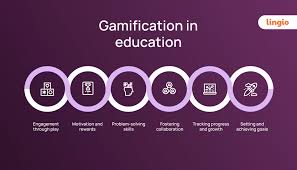
What is Gamification in Education?
Gamification in education means using parts of games in school. Think about points you get when you win a game. Or maybe badges you earn.
Leaderboards show who is doing the best. Challenges make you try harder. These things are used in lessons.
The goal is to make learning feel less like work. It should feel more like playing. This can help students stay interested.
It can also help them learn more. It is not about playing actual video games in class. It is about using the ideas from games.
Many people think games are just for fun. But they can be very smart. Games have rules.
They have goals. They give you feedback. They help you get better.
These are good things for learning. So, we take these good things and put them into school.
Why Use Gamification in Learning?
Why bother with games? Because kids love games. Adults do too!
Games grab our attention. They make us want to keep going. They make us want to reach the next level.
This is exactly what teachers want for learning.
Learning can be hard. It can be boring sometimes. Gamification can change that.
It can make boring tasks exciting. It can make hard problems feel like puzzles. This makes students more willing to try.
They might even enjoy the challenge.
It helps students feel a sense of progress. Earning points or badges shows them they are moving forward. This is very motivating.
It makes them want to learn more. They feel good about what they achieve. This builds their confidence.
How Does Gamification Work in Classrooms?
Teachers can use many game ideas. They can give points for homework. They can give badges for mastering a skill.
For example, a student could earn a “Multiplication Master” badge. This shows they are good at multiplying.
Leaderboards can show who has the most points. This adds a little friendly competition. Students might try harder to get on the board.
They might study more. They might help classmates so they can both do well.
Challenges can be set up. A class might have a “Reading Challenge.” If everyone reads a certain number of books, they all get a reward. This teaches teamwork.
It also makes reading fun.
Progress bars are another idea. They show how far a student has come. They also show how far they have to go.
This helps students see their journey. It makes the end goal seem closer.
My Own Experience with a Gamified Lesson
I remember one time I was helping a group of middle schoolers with a science project. They were supposed to learn about circuits. Most of them were fiddling with their phones.
Their eyes glazed over when I started talking about anodes and cathodes. It was a disaster waiting to happen.
So, I decided to try something different. I turned the whole lesson into a “Circuit Detective” mission. I gave them a “case file” with a broken toy.
Their mission was to figure out why it wouldn’t turn on. I handed out “tool kits” (basic circuit components). I created a simple “circuit builder” app on their tablets.
As they correctly identified parts and made connections, they earned “clue points.” Finding a fault earned them “deduction stars.” The first team to successfully fix the toy and explain why it was broken won the “Master Electrician” badge. The energy in the room shifted completely. Kids were huddled together, pointing at diagrams, explaining things to each other.
The quiet annoyance I felt earlier turned into excitement. They were actively problem-solving, not just passively listening.
By the end, every single student understood how a basic circuit worked. They were proud of their “detective” work. They asked me questions about more complex circuits.
It was a stark reminder that making learning a bit like a game can unlock so much engagement.
Gamification Elements in Action
Points: Awarded for tasks, correct answers, or participation. They show progress.
Badges: Digital or physical awards for achieving milestones. They represent mastery.
Leaderboards: Show rankings based on points or achievements. They encourage friendly competition.
Levels: Mark progression through a curriculum or set of skills. They offer a clear path forward.
Challenges: Specific tasks or problems to solve. They promote critical thinking.
Benefits of Gamification for Students
Gamification makes learning more fun. This is a big plus. When learning is fun, students want to do it.
They feel happy. They want to learn more. This is good for their minds.
It helps students get better at solving problems. Games often have puzzles. Students learn to think.
They try different ways to win. This skill helps them in all subjects. It also helps them in life.
Students learn to try again if they fail. In games, you often lose. But you don’t stop.
You try again. You learn from your mistakes. This is important for learning.
It makes students stronger. They don’t give up easily.
It can help shy students. Some kids are afraid to speak up. Gamification can give them a way to participate.
They can earn points. They can earn badges. This can make them feel more confident.
Then, they might start talking more.
Gamification can also help with focus. Games need attention. Students learn to focus on the task.
They block out distractions. This helps them learn better. They remember more.
Benefits for Teachers and Educators
Teachers can use gamification to get students more involved. When students are engaged, teaching is easier. It is more rewarding for the teacher too.
It helps teachers see who is learning. Points and badges show progress. Teachers can see who needs help.
They can see who is doing great. This helps them plan lessons better.
Gamification can make lessons more memorable. Fun lessons stick in students’ minds. They remember what they learned.
This means they learn more in the long run.
It can help manage classroom behavior. When students are engaged, they behave better. They are busy learning.
They don’t have time to cause trouble. It makes the classroom a happier place.
Quick Scan: Gamification Wins
- Increased Engagement: Students are more interested.
- Better Motivation: They want to learn and achieve.
- Improved Retention: They remember more information.
- Skill Development: They learn problem-solving.
- Positive Attitude: Learning becomes enjoyable.
- Reduced Anxiety: Fear of failure decreases.
Real-World Examples of Gamification in Education
Many schools and platforms use gamification. Khan Academy is a great example. It gives points and badges for watching videos.
It gives badges for completing exercises. Students can track their progress.
Duolingo is a language learning app. It uses points, levels, and streaks. You get points for lessons.
You try to keep a “streak” going. This means you learn every day. It makes learning a language fun.
Classcraft is a tool for teachers. It turns the classroom into a game. Students have avatars.
They earn points for good behavior. They can use powers. Teachers can create quests.
It helps manage behavior and engage students.
Some math programs use leaderboards. Students compete to get the highest score on quizzes. This can push them to study more.
They want to be at the top of the list. This can be very motivating for some.
History classes can use timelines as games. Students earn points for placing events correctly. They might get “era expert” badges.
This makes learning history more interactive.
Gamification vs. Game-Based Learning
It’s important to know the difference. Gamification is not the same as game-based learning. Gamification uses game elements in a learning activity.
It takes a regular lesson and adds game ideas.
Game-based learning is using an actual game to teach. For example, playing a history video game. Or using a puzzle game to teach math.
The game itself is the learning tool.
So, gamification adds game flavor. Game-based learning is the game.
Gamification vs. Game-Based Learning
Gamification:
- Adds game elements (points, badges) to existing learning tasks.
- Focuses on motivation and engagement within a non-game context.
- Example: Earning points for completing math problems.
Game-Based Learning:
- Uses an actual game as the primary learning tool.
- Learning happens through playing the game.
- Example: Using a simulation game to teach economics.
Potential Challenges and How to Overcome Them
Gamification is not always perfect. Sometimes, it can go wrong. One problem is too much focus on points.
Students might only do work for points. They might not learn the real lesson.
Teachers need to balance points with learning goals. The points should show understanding. They should not be the only reason to try.
Make sure the game elements support the lesson.
Another issue is competition. Some students don’t like competition. Leaderboards can make them feel bad.
They might feel like they are always losing. This can hurt their motivation.
Teachers can use different types of leaderboards. They can have team leaderboards. They can celebrate effort, not just winning.
They can also offer other ways to succeed besides leaderboards.
Some students might become addicted to points. They might only care about the score. They might not engage with the material deeply.
It’s important to design the game elements carefully.
The challenge is to make the game fun and educational. The rewards should be meaningful. They should show real learning.
The focus must stay on the subject matter.
Addressing Gamification Pitfalls
Problem: Focus on Points Only
Solution: Tie points directly to learning outcomes. Emphasize understanding over quantity of points.
Problem: Negative Competition
Solution: Use team challenges or celebrate effort. Offer diverse reward systems.
Problem: Over-Simplification
Solution: Ensure game mechanics support deep learning, not just surface-level engagement.
Problem: Lack of Meaningful Rewards
Solution: Make rewards relevant to achievements and learning goals. Avoid generic digital trinkets.
The Role of Technology in Gamification
Technology makes gamification easier. Apps and websites are great tools. They can track points automatically.
They can display leaderboards instantly. They can give out badges with a click.
Learning management systems (LMS) can have gamified features. Teachers can set up points systems. They can create quizzes that feel like games.
Interactive whiteboards can be used for games. Online games can be played as a class. This brings technology into the lesson.
It makes it more dynamic.
Virtual reality (VR) and augmented reality (AR) offer new ways. Imagine a history lesson in VR. You could walk through ancient Rome.
You might earn points for finding artifacts. This is very immersive.
However, technology is not always needed. Teachers can gamify a classroom with just paper and pencils. They can create charts for points.
They can make physical badges. The idea is more important than the tech.
Gamification for Different Age Groups
Gamification works for many ages. For young kids, it’s about simple rewards. They love stickers.
They love praise. They might get a “Super Reader” sticker for reading a book.
For elementary school, it can be more complex. Points for homework. Levels for math skills.
Small competitions for spelling bees. They enjoy clear rules and immediate feedback.
Middle schoolers often respond well to leaderboards. They like challenges. They enjoy a bit of competition.
They can handle more complex game rules. They also like the idea of unlocking content.
High school students might respond to more sophisticated gamification. Think about simulations. Or role-playing games that teach economics or civics.
They might appreciate badges for advanced skills or college prep tasks.
Even adults can benefit. Online courses often use points and progress bars. This helps professionals stay motivated as they learn new skills.
Gamification taps into basic human desires for achievement and progress.
Age-Appropriate Gamification Ideas
Kindergarten – 2nd Grade:
- Sticker charts for good behavior or task completion.
- Simple point systems for participation.
- Themed learning games (e.g., “Farm Animal Counting”).
3rd Grade – 5th Grade:
- Badge systems for mastering specific skills (e.g., “Multiplication Expert”).
- Classroom leaderboards for reading challenges.
- Cooperative quests where students work together.
6th Grade – 8th Grade:
- “Leveling up” through curriculum units.
- Unlockable content or bonus activities.
- Debate or problem-solving challenges with point rewards.
9th Grade – 12th Grade:
- Simulation games for subjects like economics or government.
- Project-based learning with scored milestones.
- Career exploration quests earning “skill points.”
The Psychology Behind Gamification
Gamification works because it uses psychology. It taps into our natural drive for achievement. We like to accomplish things.
We like to feel good about ourselves.
It uses the principle of “operant conditioning.” This means we are more likely to repeat actions that get us rewards. Points and badges are rewards. They encourage us to keep learning.
It also uses “intrinsic motivation.” This is when we do something because we enjoy it. Or because it feels good to learn. Gamification can help make learning feel more intrinsically rewarding.
The feeling of progress is important. Seeing a progress bar fill up makes us feel like we are moving forward. It gives us hope.
It makes us want to finish.
Social connection is another factor. Leaderboards can create a sense of community. We see what others are doing.
We might want to join in. We might work with others.
Designing Effective Gamified Learning Experiences
To design good gamification, think about the students. What motivates them? What are their goals?
Make the rules clear. Students need to know how to earn points. They need to understand the challenges.
Ambiguity leads to frustration.
The rewards must feel earned. They should be meaningful. A badge for simply showing up is not motivating.
A badge for mastering a hard skill is.
Keep it simple at first. Don’t make the game too complex. Start with a few basic elements.
Then, add more as needed.
Balance competition and collaboration. Not everyone thrives on competition. Offer ways for students to work together.
This fosters a more inclusive environment.
Test and refine. See what works. See what doesn’t.
Get feedback from students. Adjust the game elements based on what you learn.
Keys to Designing Great Gamification
Know Your Audience: Understand student motivations and interests.
Clear Rules: Ensure mechanics are easy to understand and follow.
Meaningful Rewards: Make achievements feel earned and significant.
Start Simple: Begin with core game elements and build complexity.
Balance: Mix competition with opportunities for collaboration.
Iterate: Collect feedback and continuously improve the design.
What This Means for the Future of Education
Gamification is not just a trend. It is changing how we think about learning. It shows that learning can be fun.
It can be engaging. It can be effective.
As technology advances, gamification will become more sophisticated. We might see more immersive experiences. We might see AI that personalizes games for each student.
It can help bridge gaps. It can make education more accessible. It can help students who struggle with traditional methods.
However, it’s important to remember that gamification is a tool. It is not a replacement for good teaching. Teachers are still the most important part of education.
Gamification should support learning goals. It should make education better. It should help students succeed.
The focus must always be on the student’s growth and understanding.
When is Gamification Most Effective?
Gamification works best when the goals are clear. When the rewards are tied to learning. It is most effective when it is part of a well-designed lesson.
It is great for subjects that students find hard. Or for tasks that are repetitive. It can make these things more interesting.
It can help students build skills over time.
It’s also effective when students need more motivation. For students who struggle to focus. Or for those who need encouragement.
Gamification is less effective if it’s just added on. If it doesn’t connect to the actual learning. If it’s just points for the sake of points.
It should feel natural. It should enhance the learning, not distract from it. When done right, it can be a powerful tool for engagement.
Common Questions About Gamification in Education
Is gamification suitable for all subjects?
Yes, gamification can be adapted for almost any subject. While it might be more obvious in subjects like math or language arts, creative approaches can apply it to science, history, art, and even physical education.
Does gamification require expensive technology?
No, not at all. While technology can enhance gamification, it’s not a requirement. Teachers can use simple tools like charts, stickers, and verbal praise to implement gamified elements effectively in any classroom setting.
Will students become too reliant on rewards?
This is a potential challenge. Effective gamification designs aim to foster intrinsic motivation alongside extrinsic rewards. The goal is for students to enjoy the learning process itself, with rewards serving as encouragement rather than the sole driving force.
How do you measure the success of gamification?
Success is measured by improvements in student engagement, motivation, participation, and ultimately, learning outcomes. Teachers can observe behavioral changes, track progress through the gamified system, and assess understanding through traditional methods.
Can gamification be used for assessment?
Yes, gamified elements can be integrated into assessments. For example, completing a series of challenges or earning a certain number of points might signify mastery of a topic. However, it’s important to ensure assessments still accurately measure learning objectives.
What is the difference between gamification and serious games?
Gamification applies game elements to non-game contexts (like education). Serious games are actual games designed for a primary purpose other than pure entertainment, such as education, training, or awareness.
Conclusion
Gamification in education is a powerful way to boost engagement. It uses game ideas to make learning more exciting. It helps students learn better.
It makes teachers’ jobs easier. When used wisely, it can transform the classroom experience for everyone involved.


