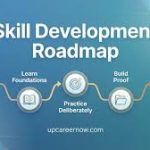
The fastest ways to learn new skills involve focused practice, breaking down complex topics into small steps, and using active recall. It’s about smart, consistent effort, not just spending hours. Finding what works for you is key to mastering new abilities quickly and efficiently.
Understanding How We Learn Best
Learning is like building a house. You need a good plan. You also need the right tools.
And you need to build it step-by-step. Our brains are amazing at learning. But they work best in certain ways.
Understanding these ways helps us learn faster. It’s not about being born a genius. It’s about using smart learning strategies.
These strategies make your learning time count. They help you remember things better. They also help you use what you learn.
Think of it as working smarter, not just harder.
Many people think learning takes forever. They try to cram too much information at once. This often leads to frustration.
It makes the skill feel out of reach. But this isn’t how our minds really work. Our brains prefer clear steps.
They like to practice things over and over. They also like to test themselves. When you learn in a way that matches your brain’s natural abilities, things click much faster.
You feel a sense of progress. This keeps you motivated. It makes the whole process enjoyable.
The Power of Focused Practice
When you want to learn something fast, practice is your best friend. But not just any practice. We need focused practice.
This means you’re not just going through the motions. You’re paying close attention. You know exactly what you’re trying to get better at.
It’s like a chef practicing a specific knife cut. They aren’t just chopping vegetables. They are working on the precision of that one cut.
Think about learning to ride a bike. You don’t just pedal around aimlessly. You focus on balancing.
You focus on steering. You focus on not falling. Each attempt is a chance to improve a specific part of your riding.
This focused effort makes a huge difference. It helps your brain build strong connections for that skill. These connections are what make the skill feel natural over time.
Without focus, practice can be slow. It might not lead to real improvement. You might just be repeating mistakes.
Focused Practice in Action
What it is: Deliberately working on a specific part of a skill. You know what you want to improve. You pay close attention.
You get feedback. Then you try again.
Why it works: It hones in on weak spots. This is where the most growth happens. It makes your learning time super efficient.
Your brain gets stronger at that exact task.
How to do it: Break down the skill. Pick one small part. Practice it until it’s better.
Then move to the next small part.
So, how do you make your practice focused? First, break the skill down. What are the smallest pieces of this new skill?
For learning a language, it might be learning common greetings. For learning to code, it could be writing a simple loop. Once you have a small piece, work on it.
Give it your full attention. Try to do it without mistakes. Then, check your work.
Did you do it right? What could be better? This self-correction is part of focused practice.
It guides your brain toward the correct way of doing things.
This type of practice is often called “deliberate practice.” It’s not always fun. It can feel challenging. But it’s incredibly effective.
It’s what experts do. They don’t just do the same thing over and over. They push themselves just beyond their current ability.
They aim to fix specific problems. This is how skills grow rapidly. It’s the engine behind fast learning.
It helps you bypass plateaus where you feel like you’re not improving anymore.
The Magic of Breaking Down Skills
Big skills can feel overwhelming. Imagine trying to learn to cook a whole Thanksgiving dinner on day one. It’s too much.
Your brain gets a bit overloaded. You don’t know where to start. This is why breaking down skills is so important.
It takes a giant task and makes it tiny. You focus on one small, manageable piece at a time.
This approach makes learning feel much easier. It gives you small wins. Each small win builds your confidence.
It makes you want to keep going. It’s like climbing a ladder. You don’t jump to the top.
You step on each rung. Each rung is a small success. You know you can reach the next one.
This makes the climb feel possible. It makes the goal seem achievable.
Let’s say you want to learn to play the guitar. The whole guitar seems complicated. There are strings, frets, chords, and strumming patterns.
It’s a lot. But what if you just learned to hold the guitar properly? That’s one small step.
Then, what if you learned how to strum one basic rhythm? That’s another small step. Then, you learn one simple chord.
You practice switching between two chords. Each of these is a tiny piece. When you add them up, you’re playing a song before you know it.
Your Skill Breakdown Toolkit
Identify the Goal: What do you want to do perfectly?
Deconstruct: List all the tiny actions needed. Think like a step-by-step manual.
Sequence: Put the steps in a logical order. What must come first?
Master Each Step: Focus on getting one small part right before adding another.
Connect the Pieces: Once small parts are mastered, join them together.
This method works for almost any skill. Whether it’s writing, drawing, coding, or speaking a new language, breaking it down is key. It makes the learning path clear.
You always know what to work on next. It removes the guesswork. It makes learning less intimidating.
It’s a fundamental part of learning quickly. It ensures you build a strong foundation with each small step.
I remember trying to learn basic Python. The whole idea of programming felt like a foreign language. I saw endless code examples online.
It was confusing. But then I found a guide that started with just printing text to the screen. Just that.
One command: `print()`. I practiced that. Then, I learned to store a piece of text in a variable.
Just one variable. These tiny steps felt so small. But they were building blocks.
Soon, I was putting these blocks together. I was writing simple programs. Breaking it down made it possible.
The Power of Active Recall
Have you ever studied for a test by just rereading your notes? You might feel like you’re learning. But it’s often not very effective for long-term memory.
A much better way is called active recall. This means you actively try to pull information out of your brain. You don’t just look at it.
You try to remember it.
Think about asking yourself questions. Or trying to explain something to someone else without looking at your notes. This effort makes your brain work harder.
And harder work leads to stronger memories. It’s like exercising a muscle. The more you use it, the stronger it gets.
When you try to recall information, you are strengthening the pathways in your brain that hold that information.
This is a core principle for learning fast. Instead of passive rereading, you engage. You ask, “What did I just learn?” or “How does this work?” You might use flashcards.
You write down what you remember. Then you check if you’re right. If you’re wrong, that’s okay.
It shows you exactly what you need to study more. If you’re right, you’ve just reinforced that knowledge.
Let’s say you’re learning vocabulary for a new language. Instead of looking at a list of words and their meanings, try this. Write the English word on one side of a card.
On the other side, try to write the foreign word. Or, try to say the foreign word out loud. Then, flip the card to check.
This is active recall. It’s much more powerful than just staring at the list. You are forcing your brain to access the information.
This makes the learning stick much better.
Active Recall Techniques
Self-Quizzing: Ask yourself questions about the material.
Flashcards: Use them for facts, vocabulary, or concepts.
Summarize: After learning something, write down or say what you remember.
Teach Someone Else: Explaining a topic to another person is a great test.
Practice Problems: Especially useful for math, science, or coding.
The key is that it feels challenging. If it’s too easy, you’re probably not recalling. You’re just recognizing.
True recall requires effort. It feels like you’re really digging into your memory. This process is crucial for making knowledge solid.
It’s what separates casual learners from those who truly master a skill quickly. It transforms passive study into active learning.
I once had to learn a lot of historical facts for a project. I tried reading the books multiple times. It felt like I was absorbing information, but it was slipping away quickly.
Then, I switched to making myself answer questions from each chapter. I would close the book and write down everything I could remember. It was hard.
I forgot a lot. But the facts I could recall stuck. They stayed with me for weeks.
That was the moment I truly understood the power of active recall.
Spaced Repetition for Long-Term Memory
Okay, so you’re practicing hard and recalling information. Great! But how do you make sure you don’t forget it next week?
That’s where spaced repetition comes in. It’s a learning schedule that involves reviewing information at increasing intervals. You revisit something you’ve learned just before you’re about to forget it.
Think of it like watering a plant. You don’t water it constantly. You water it when it starts to get dry.
Spaced repetition is similar for your brain. You review material when your memory of it is fading. This act of re-learning strengthens the memory.
It tells your brain, “This is important! Don’t let it go.” With each review, the time until the next review can get longer.
This is a very efficient way to learn. You don’t waste time reviewing things you already know perfectly. You also don’t wait too long and forget things completely.
It’s about hitting that sweet spot. It’s a science-backed method that has been proven to boost long-term retention. Many successful language learners and students swear by it.
Many apps are built around spaced repetition. They automatically schedule reviews for you. You might learn a new word today.
You’ll be asked to recall it tomorrow. If you get it right, the app will show it to you again in three days. If you get it wrong, it will show it sooner.
This adaptive system ensures you focus your effort where it’s needed most. It’s a powerful tool for fast learning.
Spaced Repetition in Practice
Initial Learning: Learn the new information.
First Review: Review it again relatively soon (e.g., 1 day later).
Second Review: If remembered, review after a longer gap (e.g., 3-5 days later).
Subsequent Reviews: Gradually increase the review intervals (e.g., 1 week, 2 weeks, 1 month).
If You Forget: Reset the interval for that item.
Using spaced repetition means your learning is not a one-time event. It’s a process. You revisit the material at strategic times.
This builds a strong, lasting memory. It’s much more effective than cramming. Cramming leads to quick forgetting.
Spaced repetition leads to durable knowledge. It’s essential for mastering skills that require you to remember a lot of information.
I started using a spaced repetition system for learning Spanish vocabulary. At first, it felt like I was constantly being asked to review words. But after a few weeks, I noticed a huge difference.
Words I learned a month ago were still fresh in my mind. This felt amazing. It meant I could focus on learning new words, not just trying to remember old ones.
This made my overall learning process so much faster and more effective.
The Importance of Feedback
Imagine practicing a golf swing, but no one tells you if you’re doing it right. You might be making the same mistake over and over. You’d never know.
This is why feedback is so crucial for fast learning. Feedback is information about your performance. It tells you what you’re doing well and what you need to improve.
Good feedback helps you correct errors early. It steers your practice in the right direction. Without it, you might be practicing the wrong way.
This wastes time. It can even create bad habits that are hard to break later. Think of a coach watching an athlete.
The coach sees things the athlete can’t. They can point out tiny adjustments that make a big difference.
Feedback can come from many sources. It could be a teacher, a mentor, or a friend. It can also come from the task itself.
For example, if you’re learning to code, error messages are a form of feedback. If you’re learning to write, getting your work edited is feedback. Even listening to yourself speak a new language provides feedback.
The best feedback is specific and actionable. “Good job” isn’t very helpful. “Your grip on the club is a little too tight, try relaxing it slightly” is much more useful.
When you receive feedback, don’t get defensive. See it as a gift. It’s a shortcut to improvement.
Ask questions about it. Make sure you understand what needs to change.
Getting the Best Feedback
Seek it Out: Don’t wait for feedback. Ask for it!
Be Specific: Ask for feedback on a particular aspect of your skill.
Listen Actively: Pay full attention when someone is giving feedback.
Ask Clarifying Questions: Make sure you understand the suggestions.
Act On It: The most important step is to use the feedback to adjust your practice.
Sometimes, you have to be your own source of feedback. This means being self-aware. It means recording yourself.
It means comparing your work to examples of masters. It’s about honest self-assessment. This ability to self-correct is a superpower for fast learners.
It allows you to keep improving even when you’re practicing alone.
When I first started writing blog posts, I would just publish them. I didn’t ask anyone to read them. I thought they were good enough.
But my engagement was low. I wasn’t growing. Then, a more experienced writer offered to review my work.
She pointed out that my paragraphs were too long. She said I used too many complex words. She showed me how to tell a story better.
Her feedback was tough to hear at first. But it was exactly what I needed. My writing improved dramatically after that.
The Role of Sleep and Rest
This might sound counterintuitive when you want to learn fast. But sleep and rest are not wasted time. They are essential for learning.
While you sleep, your brain is busy. It consolidates memories. It processes the information you learned during the day.
It makes those connections stronger. It’s like your brain’s nightly maintenance crew.
When you don’t get enough sleep, your brain can’t do this job properly. You become forgetful. Your ability to focus decreases.
Your problem-solving skills suffer. Trying to learn when you’re tired is like trying to run a race with your shoelaces tied together. It’s much harder, and you won’t perform as well.
Rest days are also important. Your brain needs breaks to recover. Pushing yourself non-stop can lead to burnout.
Burnout makes learning slow and unpleasant. Short breaks during study sessions help too. Stepping away for a few minutes allows your brain to reset.
This makes your subsequent learning periods more effective. It helps you stay sharp and avoid mental fatigue.
So, if you’re serious about learning fast, prioritize sleep. Aim for 7-9 hours of quality sleep each night. Take short breaks during your study time.
And don’t be afraid to take a full rest day when you need it. Your brain will thank you. And your learning will actually speed up because you’re working with a well-rested, efficient brain.
Sleep & Rest for Learning
Consolidation: Sleep helps your brain store new information.
Focus: Enough rest improves your attention span.
Problem-Solving: A rested brain is better at finding solutions.
Memory: Sleep directly impacts your ability to remember.
Burnout Prevention: Regular rest keeps you motivated and prevents exhaustion.
I used to pull all-nighters thinking it was the only way to get ahead. I’d cram for exams. I’d try to finish projects by working 20 hours straight.
The result? I felt groggy, unfocused, and I still didn’t perform well. My grades suffered.
My understanding was shallow. Now, I make sure I get enough sleep. I also build in short breaks.
This simple change has made a huge difference in how well I learn and how quickly I grasp new concepts. It feels like magic, but it’s just science.
The Role of Motivation and Mindset
Learning fast isn’t just about techniques. It’s also about your inner drive. Your motivation and mindset play huge roles.
Motivation is what gets you started. Mindset is how you approach challenges.
Why do you want to learn this new skill? Having a clear “why” is powerful. Is it for a new job?
A personal passion? To connect with others? When you know your purpose, it’s easier to push through tough spots.
This purpose fuels your motivation. It makes the effort feel worthwhile.
Your mindset is equally important. Do you believe you can learn this skill? Or do you think you’re not “good enough”?
If you have a fixed mindset, you might give up easily. You see mistakes as proof you’re not smart enough. But a growth mindset is different.
You believe your abilities can be developed. Mistakes are seen as learning opportunities. Challenges are chances to grow stronger.
This belief is key to persisting.
When learning gets difficult, and it will, your mindset will be tested. A growth mindset helps you view setbacks differently. You don’t see them as failures.
You see them as feedback. This perspective is essential for staying committed. It helps you learn faster because you’re not wasting energy doubting yourself.
Surround yourself with positive influences. Find communities or people who encourage learning. Seeing others succeed can be inspiring.
It shows you what’s possible. Celebrate your small wins along the way. Acknowledge the progress you’ve made.
This positive reinforcement keeps your motivation high. It makes the learning journey more enjoyable and effective.
Fueling Your Learning Journey
Find Your “Why”: Know the reason behind your learning goal.
Embrace Challenges: See difficulties as growth chances.
Learn from Mistakes: Don’t fear errors; learn from them.
Seek Inspiration: Connect with others who are learning or have learned similar skills.
Celebrate Progress: Recognize and reward your achievements, big or small.
I used to be terrible at public speaking. Every time I had to give a presentation, I’d get so nervous. I thought I was just naturally shy.
That was my fixed mindset. I avoided speaking opportunities. But then I decided I wanted to overcome it.
I told myself, “I can get better at this.” I started with small steps, like speaking up more in meetings. I watched TED talks and analyzed how speakers engaged the audience. I sought out feedback.
Slowly, I built my confidence. My mindset shifted from “I can’t” to “I can learn.” This change was more powerful than any speaking technique I learned. It allowed me to learn much faster.
Using Technology to Your Advantage
In today’s world, technology offers amazing tools for learning. You don’t have to rely on old methods alone. There are apps, online courses, and digital resources for almost anything you want to learn.
These tools can make learning faster, more engaging, and more accessible.
Online courses from platforms like Coursera, edX, or Udemy offer structured learning paths. They often have videos, quizzes, and assignments. Many are taught by experts in their fields.
This gives you access to high-quality instruction from anywhere. You can learn at your own pace. You can revisit lessons as often as you need.
This flexibility is a huge advantage for fast learning.
Language learning apps like Duolingo or Babbel use gamification and spaced repetition. They make learning vocabulary and grammar fun and sticky. Coding platforms like Codecademy or freeCodeCamp let you practice coding directly in your browser.
You get instant feedback. You learn by doing. This hands-on approach is incredibly effective.
Even simple tools can help. Note-taking apps like Evernote or Notion can help you organize your learning materials. Mind-mapping software can help you visualize complex ideas.
Video platforms offer countless tutorials on virtually any topic. YouTube, for instance, is a vast library of free learning content.
Tech Tools for Faster Learning
Online Courses: Structured lessons from experts.
Language Apps: Gamified practice for vocabulary and grammar.
Coding Platforms: Interactive coding exercises with instant feedback.
Note-Taking Apps: Organize your learning resources.
Video Tutorials: Visual guides on a vast range of topics.
The key is to choose tools that fit your learning style and the skill you’re trying to acquire. Don’t get overwhelmed by all the options. Start with one or two tools that seem most relevant.
Use them consistently. Technology can be a powerful accelerator for learning. It can provide resources, structure, and practice opportunities that were hard to find before.
It helps you learn more efficiently.
When I wanted to learn about digital marketing, I felt lost. There was so much information. Then I found a comprehensive online course.
It covered SEO, social media, email marketing, and more. The modules were broken down into short, digestible videos. I could pause, take notes, and replay sections.
I also used a note-taking app to save key points. This combination of structured learning and organized notes made the process much faster than just reading random articles. I was able to gain a solid understanding quickly.
Making Connections to Prior Knowledge
Our brains don’t learn in a vacuum. We build new knowledge on top of what we already know. This is why making connections to prior knowledge is so important for fast learning.
When you can link new information to something familiar, it makes the new information easier to understand and remember.
Think of your brain like a giant web. Each piece of information is a point on the web. New information can be connected to existing points.
The more connections a piece of information has, the easier it is to find and access. If you learn something completely new, with no links to anything you know, it’s like an isolated point. It’s hard to grasp and easy to forget.
How can you actively make these connections? Ask yourself: “How is this like something I already know?” or “What does this remind me of?” For example, if you’re learning about a new historical event, try to compare it to other events you’ve studied. If you’re learning a new cooking technique, relate it to techniques you already use.
This process helps to build a more robust understanding. It creates multiple pathways to access the information. It also helps you see the bigger picture.
You start to understand how different concepts fit together. This deeper understanding leads to faster and more effective learning. It moves you beyond rote memorization towards true comprehension.
Connecting New to Old
Ask “How is this similar?”: Compare new concepts to familiar ones.
Ask “How is this different?”: Understand what makes the new idea unique.
Use Analogies: Find simple comparisons to explain complex ideas.
Relate to Your Experience: Connect learning to your personal life or past events.
Build a Mental Map: See how new information fits into your existing knowledge structure.
I was learning about the concept of compound interest in finance. It sounded complex at first. But then I remembered how a snowball rolling down a hill gets bigger and bigger.
The longer it rolls, the more snow it picks up. Compound interest works similarly. The money earns interest, and then that interest also starts earning interest.
This analogy made the concept click instantly. It’s now a connection I can always refer back to when explaining it.
Real-World Application and Context
One of the biggest motivators and accelerators for learning is seeing the real-world application. When you understand how a skill can be used outside of practice, it makes the learning much more meaningful. It answers the question, “Why am I even learning this?”
When you learn something in its natural context, it sticks better. It’s not just abstract knowledge. It’s something you can use.
This is especially true for practical skills. Learning to code by building a small project is more effective than just doing abstract coding exercises. Learning a language by trying to have a simple conversation is more motivating than just memorizing vocabulary lists.
Try to find ways to use your new skill as soon as possible. Even if you’re not perfect, the attempt itself is valuable. You’ll encounter real-world problems.
You’ll figure out how to solve them. This problem-solving is a huge part of learning. It forces you to apply what you’ve learned.
It shows you where your knowledge gaps are.
If you’re learning a craft, like woodworking, try to build something useful for your home. If you’re learning a business skill, like negotiation, try to apply it in low-stakes situations. The more you can practice in real scenarios, the faster you will master the skill.
This practical experience is irreplaceable. It bridges the gap between knowing and doing.
Putting Skills to Work
Project-Based Learning: Build things that use your new skill.
Simulations: Practice in realistic but safe environments.
Real-World Practice: Apply the skill in everyday situations.
Problem-Solving Focus: Use the skill to solve actual problems.
Seek Application Opportunities: Look for ways to volunteer or assist others using your skill.
When I decided to learn graphic design, I was using a design program and following tutorials. It was okay, but I wasn’t truly learning until I started designing for friends. One friend needed a flyer for a small event.
Another wanted a logo for their new project. Working on these real projects was challenging. I had to make design choices.
I had to consider the client’s needs. This practical application accelerated my learning like nothing else. I learned much faster than I would have just by watching videos.
When Is It Okay to Learn Slowly?
While we’re talking about learning fast, it’s also important to remember that not everything needs to be rushed. Sometimes, a slower pace allows for deeper understanding and reflection. Enjoying the process itself is valuable.
Complex skills that require deep intuition, like becoming a master musician or a seasoned therapist, may naturally take years. Rushing through these can lead to superficial understanding. It might miss important nuances.
Some topics benefit from slow contemplation. You might need time to let ideas settle and integrate.
The goal is not always speed. It’s about effective learning that sticks. Sometimes, the fastest way is to not rush.
It’s about building a truly solid foundation. So, gauge the skill and your goals. If speed is critical, use the methods discussed.
If depth and mastery are the priority, a more measured approach might be best.
Quick Fixes & Tips for Faster Learning
Here are some practical tips you can start using today to speed up your learning:
- Set Clear, Small Goals: Instead of “learn guitar,” aim for “learn the C chord today.”
- Minimize Distractions: Turn off notifications. Find a quiet space.
- Use the Pomodoro Technique: Work in focused bursts (e.g., 25 minutes) followed by short breaks.
- Teach Someone Else: Explaining a concept solidifies your understanding.
- Visualize Concepts: Draw diagrams, use mind maps, or create mental images.
- Vary Your Learning Methods: Combine reading, watching, listening, and doing.
- Get Enough Sleep: Crucial for memory consolidation.
- Stay Curious: A genuine interest makes learning exciting.
Frequent Questions About Learning Skills
How can I learn a new skill in just one week?
Learning a new skill in one week is ambitious. It’s possible for very simple skills or to gain a basic understanding. Focus on the absolute core elements.
Break it down into the smallest steps. Practice intensely and deliberately. Use active recall and seek immediate feedback.
For complex skills, aim for a strong foundation in a week, not mastery.
Is it better to focus on one skill or learn many at once?
For faster progress, focusing on one skill at a time is usually more effective. It allows for deeper concentration and dedicated practice. Learning many skills at once can lead to shallow understanding and slower overall progress.
Once you reach a good level in one skill, you can then add another.
How do I stay motivated when learning gets hard?
Revisit your “why.” Remind yourself of the benefits of learning the skill. Break down the difficult parts into even smaller steps. Celebrate small victories.
Connect with others learning the same thing for support. Remember that challenges are normal and are part of the learning process.
What is the difference between learning and memorizing?
Memorizing is about retaining facts or information for recall. Learning is a broader process that involves understanding concepts, applying knowledge, and integrating new information. Fast learning focuses on understanding and application, not just memorization.
Can I really learn a new skill at any age?
Yes! While it might feel different, adults have many advantages in learning. They have more life experience to draw upon, better self-discipline, and a clearer understanding of their learning goals.
The brain remains capable of learning throughout life.
How important is a teacher or mentor for learning fast?
A good teacher or mentor can significantly speed up learning. They provide expert guidance, feedback, and can help you avoid common pitfalls. They can structure your learning path effectively.
However, you can still learn fast independently by using smart strategies and resources.
Conclusion
Learning new skills doesn’t have to be a slow, frustrating process. By using focused practice, breaking down complex topics, and employing techniques like active recall and spaced repetition, you can significantly speed up your progress. Remember the power of feedback, rest, and a positive mindset.
Technology and real-world application are your allies. Embrace these strategies, and you’ll be amazed at how quickly you can learn and grow.